
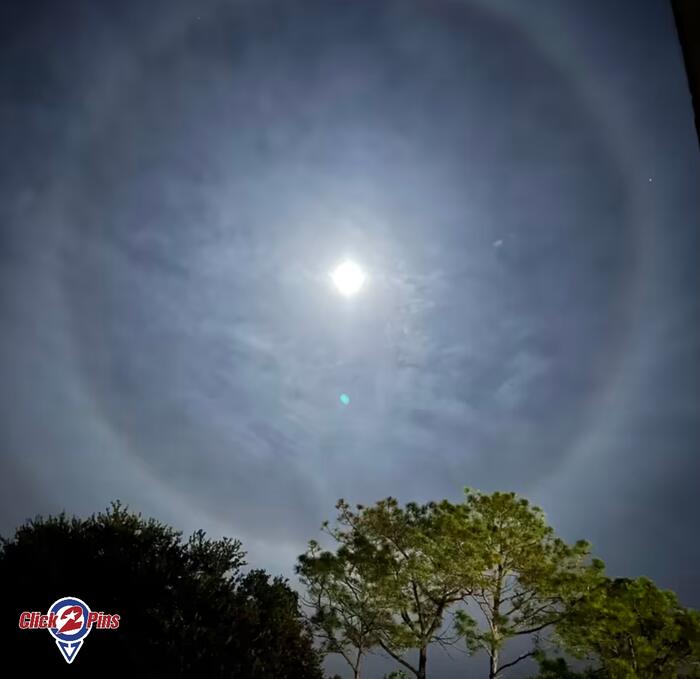
Sunday night, the Moon put on quite a show. A large, glowing ring appeared around it, and several KPRC 2 viewers shared their pictures on Click2Pins.com. The photos came from across Southeast Texas, showing just how widespread this atmospheric display was.
So, what causes a ring around the Moon? And is the old saying “ring around the moon, rain soon” really true?
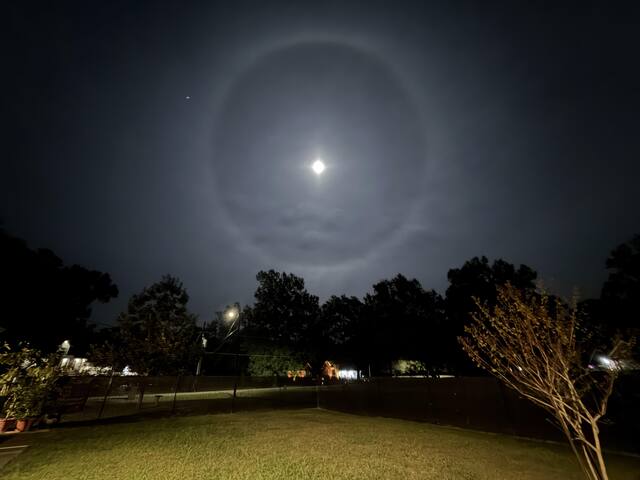
Lunar halos aren’t unusual, but the right atmospheric conditions have to come together.
First, you need a bright Moon. A full or nearly full Moon makes a halo easier to see, although halos can form during other lunar phases. Sunday night’s full Moon provided plenty of light to illuminate the display.
Second, you need high-altitude clouds containing tiny ice crystals. Cirrus clouds float roughly 20,000 to 40,000 feet above the ground, and sometimes even higher.
Those ice crystals were present across Southeast Texas Sunday night. Because the clouds covered such a broad area, viewers throughout the region were able to capture the same phenomenon.

Here’s where the science gets interesting.
As moonlight passes through the ice crystals, it bends, a process called refraction. The crystals act like tiny prisms, redirecting some of the light toward your eyes and creating a ring with an apparent radius of about 22 degrees.
Want to estimate that distance in the sky? Hold your hand at arm’s length and spread your thumb and pinky as far apart as possible. Put your thumb on the moon and your pinky will touch the outer ring. The distance between them is roughly 22 degrees, giving you a handy way to estimate the halo’s radius.
The same process creates halos around the Sun. The difference is simply the light source.
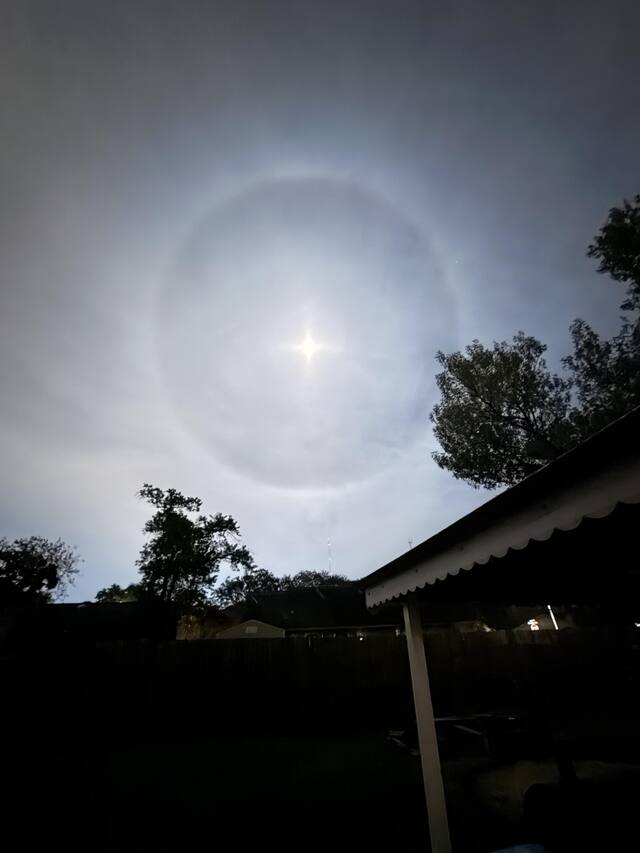
French scientist Edme Mariotte helped explain the science behind atmospheric halos in the late 17th century, showing how ice crystals could bend light to produce these rings.
But people were noticing halos long before scientists understood why they formed. Over time, the observation became a familiar piece of weather folklore:
Is there any truth to it? Sometimes...
High, thin clouds can arrive ahead of an approaching weather system. If those clouds contain ice crystals, they may produce a lunar halo before thicker clouds and precipitation move in. Depending on the weather pattern, rain may follow within the next day or so.
But a halo isn’t a guarantee of rain. High clouds can move overhead without producing precipitation, so the halo alone isn’t a reliable forecast.
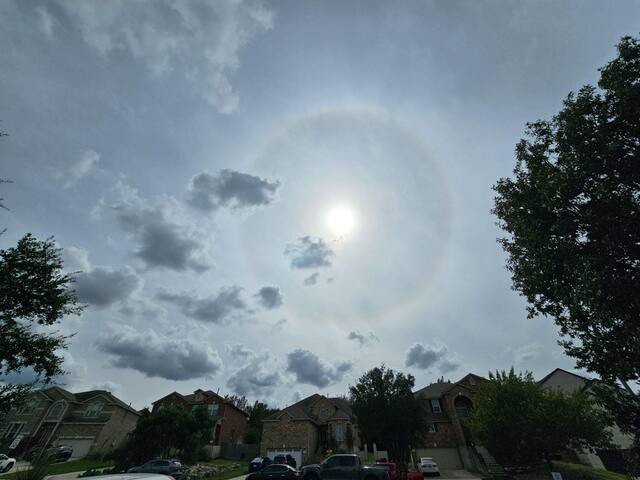
If you looked outside today, guess what? It’s raining!
That doesn’t mean the halo predicted the rain with certainty. It does, however, offer a great example of how observing the sky can give us clues about what’s happening in the atmosphere and what might be coming next.
Sometimes, an old weather saying has a little science behind it.
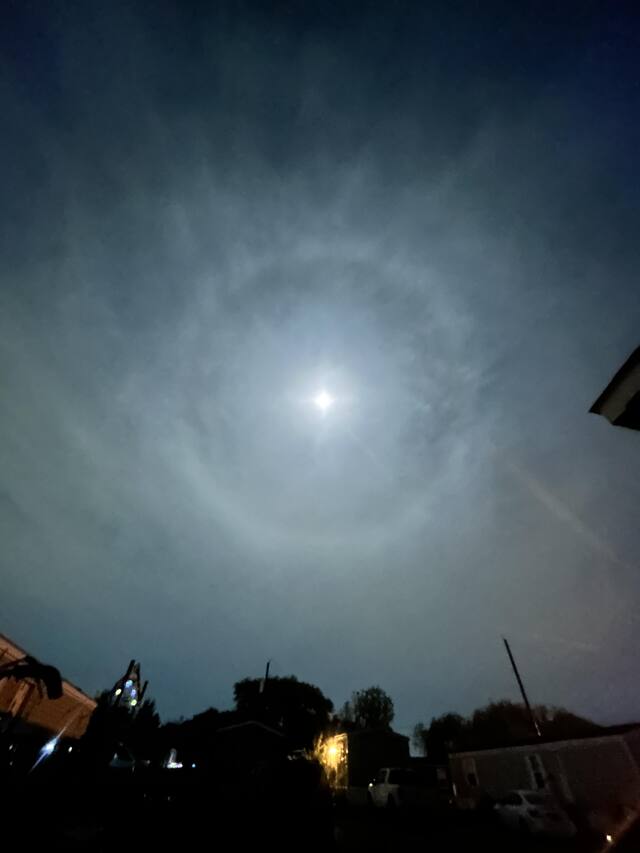
If you ever capture a beautiful picture we’d love to see it. please share it to www.click2pins.com.


